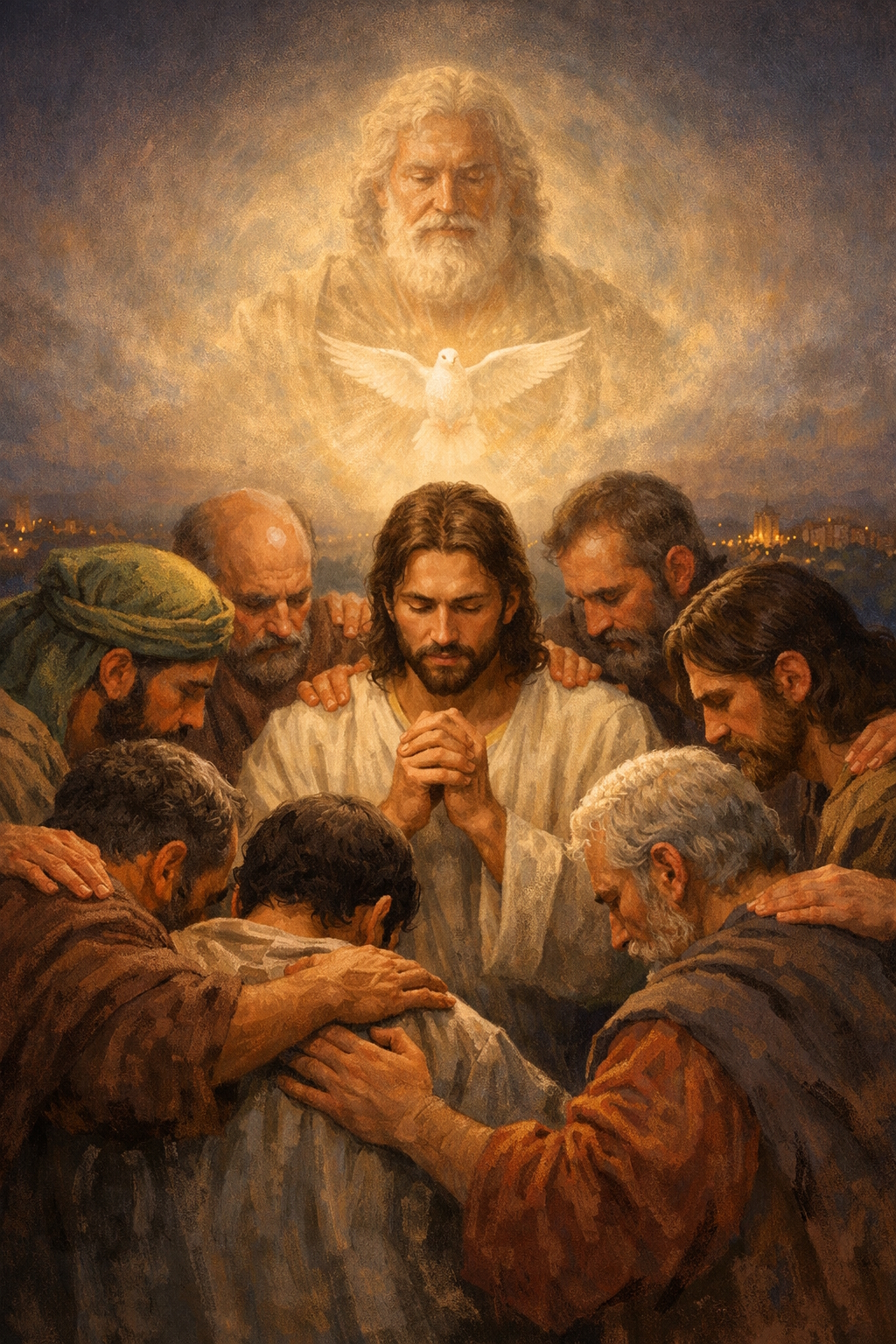
On the night before His death, Jesus prayed for those who would believe in Him through the witness of His disciples. His request was not for their success, their influence, or their doctrinal precision. It was for their unity. That they may all be one, He prayed, as you, Father, are in me and I am in you. The purpose of this unity was not internal comfort but external witness: so that the world may believe. From the beginning, the credibility of the church’s message has been bound to the quality of its fellowship. Division does not merely grieve the heart of Christ. It undermines the mission He entrusted to His people.
Yet the history of the church is marked by fracture. The Great Schism of 1054 separated East from West over questions of authority and liturgy. The Reformation of the sixteenth century, while recovering essential truths about grace and Scripture, produced further fragmentation. Today, thousands of denominations exist, each with its own emphases, structures, and convictions. Some of these divisions reflect genuine disagreements about how to read Scripture faithfully. Others reflect personality, culture, or preference dressed in theological clothing. And some, if we are honest, reflect pride.
Paul confronted this problem in Corinth. The church had fractured into factions, each claiming allegiance to a different leader. I follow Paul, some said. I follow Apollos. I follow Cephas. I follow Christ. Paul’s response was sharp: Is Christ divided? Was Paul crucified for you? Were you baptised in the name of Paul? He reminded them that he had planted, Apollos had watered, but God gave the growth. Neither the one who plants nor the one who waters is anything, but only God who gives the growth. The leaders were servants, not celebrities. The church belonged to Christ, not to those who served it.
This remains a needed word. In every generation, the temptation arises to elevate human figures beyond their proper place. Preachers become personalities. Teachers become brands. Spiritual gifts become badges of status. What begins as gratitude for a faithful minister can drift into dependence on a personality. What begins as appreciation for a particular tradition can harden into an identity defined by opposition to others. When believers say I am of this movement or I am of that denomination with more passion than they say I am of Christ, something has gone wrong.
The same dynamic can occur with spiritual gifts. In Corinth, the gift of tongues had become a marker of spiritual superiority. Those who practised it looked down on those who did not. Paul’s correction was unsparing. To each is given the manifestation of the Spirit for the common good. Gifts are not given for personal prestige. They are given for service. The eye cannot say to the hand, I have no need of you. The body needs all its parts, and no part can claim supremacy over another. When gifts become status symbols, when certain manifestations are treated as evidence of greater spirituality, the church ceases to function as a body and becomes a competition.
This is why Scripture places such weight on humility. Paul urges the Philippians to do nothing from selfish ambition or conceit, but in humility to count others more significant than themselves. He points to Christ as the supreme example: though He existed in the form of God, He did not count equality with God a thing to be grasped, but emptied Himself, taking the form of a servant. The one who had every right to be served chose to serve. The one who possessed all authority laid it aside for the sake of others. This is the pattern for leadership in Christ’s church.
Jesus made this explicit. When James and John requested positions of honour in His kingdom, Jesus gathered the disciples and taught them: You know that those who are regarded as rulers of the Gentiles lord it over them, and their high officials exercise authority over them. Not so with you. Instead, whoever wants to become great among you must be your servant, and whoever wants to be first must be slave of all. He then washed their feet, a task reserved for the lowest household servant, and told them, I have set you an example that you should do as I have done for you.
Peter, who had witnessed that moment, later wrote to church elders with the same emphasis. Be shepherds of God’s flock that is under your care, he instructed, not lording it over those entrusted to you, but being examples to the flock. The flock belongs to God, not to the leaders. Authority is real, but it is exercised through influence and example, not domination. Leaders who forget this do damage not only to their own souls but to those they are called to serve.
The danger is not limited to individual pride. It extends to institutional pride as well. When churches define themselves primarily by what they reject in other traditions, when criticism of other believers becomes a mark of faithfulness, when unity is sacrificed for the sake of distinctiveness, the body suffers. Jesus prayed that His followers would be one so that the world would believe. When the world sees Christians attacking one another, dismissing one another, treating disagreements as grounds for contempt rather than conversation, it has little reason to believe the message of reconciling love.
This does not mean that truth is unimportant. Scripture calls believers to contend earnestly for the faith once delivered to the saints. Error must be named, and false teaching must be resisted. But Paul also instructs believers to speak the truth in love, to correct opponents with gentleness, and to avoid quarrels that produce only division. Strong language in Scripture is reserved for those who deny Christ’s divinity, reject the gospel itself, or exploit the vulnerable. It is rarely applied to differences in liturgy, practice, or secondary doctrine. When modern Christians deploy extreme language against other believers over matters the apostles handled with patience, they may be operating more from fear or identity than from apostolic precedent.
The path forward is not uniformity. The New Testament church itself contained diversity: Jewish believers who kept the law, Gentile believers who did not, congregations with different practices and emphases. Paul’s instruction in Romans 14 is instructive. He addresses disputes over food and holy days, matters on which sincere believers disagreed. His counsel is not to resolve the disagreement but to welcome one another despite it. Accept the one whose faith is weak, without quarrelling over disputable matters. Each person should be fully convinced in their own mind. The goal is not agreement on everything but being of one mind in glorifying God together.
What unites believers is not a shared tradition but a shared Lord. One body and one Spirit, Paul writes to the Ephesians, one hope, one Lord, one faith, one baptism, one God and Father of all. This is the foundation of Christian unity. It is not created by ecumenical agreements or institutional mergers. It is kept, maintained, preserved by those who recognise that Christ is not divided and refuse to act as though He were.
Dietrich Bonhoeffer, writing from an underground seminary during the Nazi era, reflected deeply on what holds Christian community together. He concluded that Christianity means community through Jesus Christ and in Jesus Christ. We belong to one another only through and in Him. This insight protects the church from two errors: the error of treating unity as something we manufacture through correct opinions or techniques, and the error of treating our particular expression of faith as the only valid one. Unity comes through Christ. It is received, not achieved.
The church today does not need less conviction. It needs conviction held with humility. It does not need fewer leaders. It needs leaders who remember that they are servants, not celebrities, and that the flock belongs to God. It does not need the erasure of tradition. It needs traditions that remain open to correction by Scripture and charitable toward those who read Scripture differently. It needs believers who define themselves by Christ rather than by contrast with other believers.
When Paul and Barnabas healed a man in Lystra, the crowds tried to worship them as gods. They tore their clothes and rushed into the crowd, crying out, We are only human, like you. They directed attention away from themselves and toward the God who made heaven and earth. This is the posture every Christian leader, every gifted believer, every church that has experienced blessing is called to adopt. The work is God’s. The glory is God’s. The church is God’s. To forget this is to build on a foundation that will not hold.
Jesus’s prayer remains. That they may be one, as we are one. The world is watching. The credibility of the gospel is at stake. And the path to unity runs not through agreement on every point, but through humility before the Lord who died for all.